Nucleic and Omics Vector Applications
Exploring Molecular Biotechnology Through Nucleic Acids, Omics and Biological Engineering
Our scientific perspective emphasizes molecular understanding, technological innovation, methodological quality, and the responsible interpretation of emerging biotechnology applications.

Modern biotechnology is evolving through the integration of nucleic acid research, molecular engineering, biological delivery systems, and advanced analytical technologies. These complementary fields provide new perspectives for understanding biological mechanisms, investigating genetic information, and exploring the molecular interactions that shape cellular function.

Nucleic and Omics Vector Applications focuses on the scientific principles underlying nucleic acids, omics technologies, and biological vectors. By bringing together molecular biology, genomic analysis, transcriptomic investigation, and computational approaches, this scientific initiative explores the methods and technologies used to characterize complex biological systems.
From DNA and RNA analysis to the interpretation of large-scale molecular datasets, biotechnology increasingly depends on the ability to connect experimental observations with reliable analytical methods. Understanding these relationships can contribute to the development of more precise experimental strategies and a deeper interpretation of biological processes.
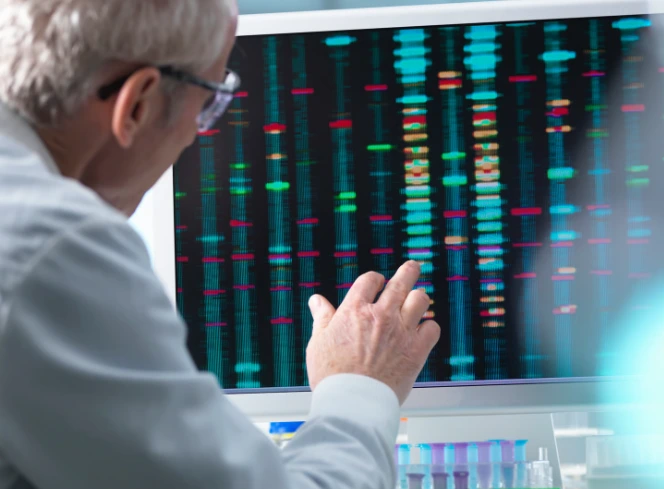
Nucleic Acids: The Molecular Foundation of Biotechnology
DNA and RNA are essential molecules involved in the storage, transmission, regulation, and expression of genetic information. Their structures and interactions provide the foundation for numerous applications in molecular biology, biotechnology, biomedical research, and genetic analysis.
DNA contains the genetic instructions required for biological development and cellular function, while RNA participates in protein synthesis, gene regulation, and a wide range of cellular processes.
The study of nucleic acids involves examining their molecular composition, sequence, structure, stability, and interactions with proteins and other cellular components.
Analytical techniques such as polymerase chain reaction, nucleic acid sequencing, electrophoresis, and spectrophotometric measurement allow researchers to investigate different characteristics of genetic material.Read more
These approaches support the identification of genetic sequences, the evaluation of sample quality, and the investigation of molecular differences between biological samples.
Understanding nucleic acid biology is therefore essential for interpreting genetic information and exploring the technologies that continue to advance modern biotechnology.

Genomics and the Analysis of Genetic Information
Genomics examines the structure, organization, variation, and function of genomes. By investigating genetic information at a large scale, researchers can explore relationships between DNA sequences, biological characteristics, and cellular processes.
Technological advances in DNA sequencing have significantly expanded the capacity to analyze genetic material. Modern sequencing approaches can generate large volumes of data, allowing the investigation of genetic variation, genome organization, and relationships between biological samples.
Genomic analysis involves several complementary stages, including sample preparation, sequencing, quality assessment, sequence alignment, variant identification, and computational interpretation.
Bioinformatics tools are particularly important because genomic datasets often contain millions of sequence observations that require systematic processing.
The interpretation of genomic information depends on data quality, appropriate analytical methods, suitable reference sequences, and careful evaluation of potential sources of uncertainty.
By connecting molecular techniques with computational analysis, genomics contributes to a more comprehensive understanding of genetic systems and their biological significance.

Transcriptomics and Gene Expression Analysis
Transcriptomics investigates the RNA molecules produced by cells, tissues, or biological systems under specific conditions. Unlike genomic analysis, which focuses primarily on DNA, transcriptomic approaches provide information about gene activity and changes in RNA abundance.
Gene expression can vary according to cellular identity, developmental stage, environmental conditions, experimental treatments, and biological responses.
Reverse transcription quantitative polymerase chain reaction is widely used to measure the expression of selected genes, while RNA sequencing allows researchers to examine expression patterns across thousands of transcripts.
Transcriptomic analysis can help identify differentially expressed genes, investigate biological pathways, and generate hypotheses about molecular mechanisms.
Reliable interpretation requires careful experimental design, appropriate normalization, sufficient biological replication, and suitable statistical analysis.
When combined with genomic information and other molecular measurements, transcriptomics provides an important perspective on the relationship between genetic information and cellular behavior.
Omics Technologies and Integrated Biological Analysis
Omics technologies investigate biological systems at multiple molecular levels. These approaches include genomics, transcriptomics, proteomics, metabolomics, and other analytical disciplines that characterize different components of biological activity.
Each omics discipline provides a distinct type of information.
1
Genomics
investigates DNA sequences, genome organization, and genetic variation.
2
Transcriptomics
examines RNA abundance and gene expression patterns.
3
Proteomics
studies proteins, their abundance, structural characteristics, and functional relationships.
4
Metabolomics
investigates small molecules associated with cellular metabolism and biochemical activity.
5
Epigenomics
examines molecular modifications and regulatory features associated with genome activity.
Although each approach provides valuable information independently, integrating multiple molecular datasets can reveal relationships that may not be apparent from a single analytical method.
Multi-omics analysis requires compatible experimental designs, careful data preprocessing, appropriate statistical procedures, and strategies for combining measurements with different characteristics.
Computational methods can support the identification of molecular associations, biological patterns, and potential relationships between different levels of biological organization.
The integration of omics technologies offers a broader framework for investigating complex biological systems and interpreting the interactions between genes, proteins, metabolites, and cellular processes.
Biological Vectors and Molecular Delivery Technologies
Biological vectors are important tools for studying and transferring genetic material in experimental biological systems. Depending on their design and purpose, they may include plasmids, viral vectors, and other engineered delivery platforms.
Vector technologies are investigated in molecular biology, genetic research, biotechnology development, and selected biomedical applications.
Understanding vector architecture requires examining the molecular components responsible for carrying genetic material, the mechanisms associated with delivery, and the factors that influence biological compatibility.
Different vector systems vary in their structure, stability, capacity, specificity, and interactions with target cells.
Their evaluation may involve molecular characterization, sequence verification, measurements of delivery performance, and assessment of the biological response under defined experimental conditions.
Non-viral delivery technologies, including lipid-based nanoparticles and polymer-based systems, also offer important approaches for investigating the transport of nucleic acids.
The study of these platforms connects molecular biology with materials science, biochemical engineering, and cellular analysis.Learn more

Molecular Engineering and Biotechnology Innovation
Molecular engineering combines biological knowledge with design principles and analytical methods to investigate or modify biological components.
In biotechnology, molecular engineering can involve the characterization of nucleic acid sequences, the design of genetic constructs, molecular cloning, and the investigation of interactions between biological molecules.
These activities require a detailed understanding of molecular structure, biological function, and the experimental conditions that influence observed results.
Advances in sequence analysis, DNA assembly, computational design, and molecular characterization have expanded the range of approaches available to researchers.
However, the performance of an engineered biological system cannot be determined from its design alone. Experimental validation remains essential for assessing stability, specificity, functionality, and potential limitations.
A rigorous approach combines theoretical understanding, appropriate experimental controls, reliable measurements, and critical interpretation of results.
Through the intersection of molecular engineering and biotechnology, researchers can investigate new experimental systems and improve their understanding of the relationships between molecular design and biological behavior.
Bioinformatics and Computational Biology
The growing scale of molecular research has increased the importance of computational approaches for processing and interpreting biological information.
Bioinformatics combines biology, computer science, mathematics, and statistics to develop methods for analyzing DNA sequences, RNA expression profiles, protein characteristics, and other molecular datasets.
Computational tools can support sequence alignment, genome annotation, differential expression analysis, pathway investigation, and the visualization of molecular relationships.
In omics research, data analysis often requires several processing stages, including quality control, normalization, statistical testing, and interpretation within an appropriate biological context.
Machine learning and other computational techniques can help identify patterns in complex datasets, although their reliability depends on data quality, model selection, validation, and the assumptions used during analysis.
Integrating computational methods with experimental biology enables researchers to examine complex questions from complementary perspectives.
The responsible use of these technologies requires transparent analytical procedures, reproducible workflows, and a clear distinction between statistical associations, computational predictions, and experimentally established mechanisms.
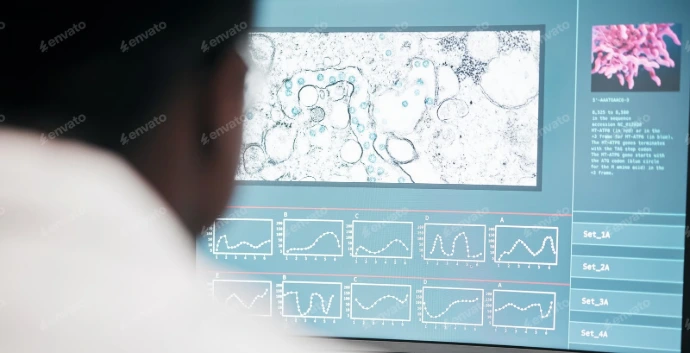
Analytical Technologies for Molecular Characterization
Accurate molecular characterization is essential for understanding biological samples and evaluating the performance of biotechnology methods.
Different analytical techniques provide complementary information about molecular quantity, sequence, structure, composition, and function.
Polymerase chain reaction enables the amplification of selected DNA regions. Reverse transcription quantitative polymerase chain reaction supports the analysis of gene expression. DNA sequencing provides information about nucleotide sequences, while electrophoresis allows the separation and visualization of nucleic acid fragments.
Additional analytical approaches, including spectrophotometry, fluorometry, chromatography, and mass spectrometry, can contribute to the characterization of biological materials and molecular components.Read article
The selection of an analytical technique depends on the research objective, the nature of the sample, the required sensitivity, and the type of information needed.
Quality control is essential throughout the analytical process. Sample integrity, instrument performance, contamination control, suitable reference materials, and appropriate experimental controls can all influence the reliability of the resulting data.
Combining analytical methods can provide a more complete understanding of biological systems and support stronger interpretations of experimental observations.


Applications in Biomedical and Biotechnology Research
Nucleic acid technologies and omics approaches contribute to a wide range of scientific investigations.
In molecular diagnostics research, nucleic acid analysis can support the detection and characterization of genetic material. In biomedical research, transcriptomic and proteomic approaches can help investigate cellular responses, molecular pathways, and biological differences between experimental conditions.
Vector technologies are studied in genetic research, vaccine development, and the investigation of nucleic acid delivery systems. Their potential applications depend on the biological system, the delivery platform, and the specific research objective.
Integrated omics approaches can also support the investigation of complex biological processes by connecting genetic variation, gene expression, protein abundance, and metabolic activity.
These applications require careful evaluation of experimental evidence, methodological limitations, biological relevance, and applicable safety and regulatory requirements.
The development of biotechnology depends not only on new technologies but also on the ability to establish their performance through reliable research and appropriate validation.
Our Scientific Vision
Nucleic and Omics Vector Applications is built around the interconnected fields of nucleic acid biology, omics technologies, biological vectors, and molecular engineering.
Our scientific vision is to present these disciplines through a coherent framework that connects fundamental biological principles with analytical methods and emerging technological applications.
By exploring genomic information, gene expression, molecular delivery systems, and integrated biological datasets, this initiative aims to provide an informative perspective on the technologies shaping contemporary biotechnology.
Scientific accuracy, methodological transparency, and responsible interpretation remain central to this approach.
As research methods continue to evolve, the integration of molecular knowledge, experimental validation, and computational analysis will remain essential to understanding biological complexity.
Explore the Future of Molecular Biotechnology
Discover the scientific principles and analytical technologies that connect nucleic acids, omics research, and biological engineering.
Explore genomic analysis, transcriptomics, molecular characterization, biological vectors, computational biology, and the integration of molecular datasets.
These complementary fields provide valuable perspectives on how biological systems function, how molecular information can be investigated, and how emerging technologies contribute to modern biotechnology research.
By connecting fundamental science with analytical innovation, Nucleic and Omics Vector Applications offers a starting point for exploring the expanding possibilities of molecular biotechnology.
Understand molecular systems. Explore omics technologies. Investigate biological innovation.